
CYANOTYPE: Exploring the Relationship Between Memory and Wellbeing Through Art
Written by Anyarin Bunbusakorn (Anya), Year 13, Shrewsbury International School, Bangkok, Thailand
Date: 23 July 2026
Introduction
Cyanotype is one of the earliest photographic printing techniques, developed by John Herschel in 1842 (Victoria and Albert Museum, n.d.). Cyanotype uses sunlight and light-sensitive chemicals to create distinctive blue prints. Although the technique was invented a long time ago, it continues to be relevant in the modern world because it connects several areas, including psychology, mental health, art, and memory.
This project explores the relationship between art, aromatherapy, memory, and mental wellbeing. It considers how Cyanotype can provide an opportunity to explore the potential connections between memory and memory loss, while also showing how Cyanotype workshops could be implemented for people of different age groups. Through this project, I aim to explore how the creative process can support wellbeing and encourage people to reflect on meaningful memories.
This project also connects to my current role as the Executive Prefect of the Wellbeing Ministry at school, as Cyanotype could be developed into a meaningful community project for students. Furthermore, as I am interested in both psychology and entrepreneurship, I hope to develop the idea of Cyanotype beyond the student body and potentially bring it to a wider community with a variety of participants.
Experimentation with Cyanotype Photographs
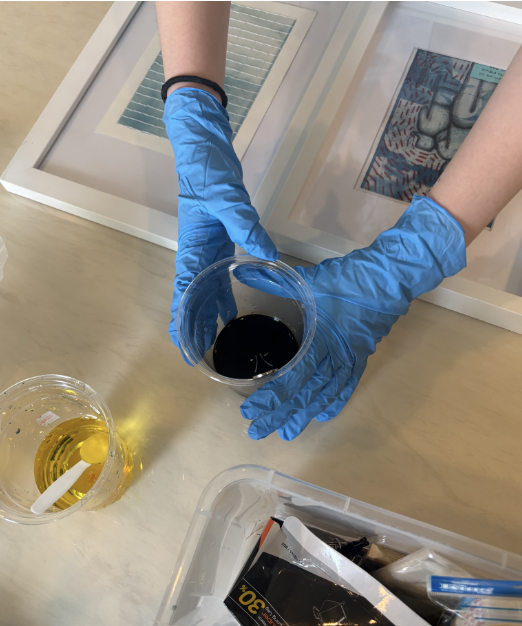
Cyanotype photographs can be transformed into blue monochromatic prints by printing digital negatives onto transparent film (Anderson, 2019). To create a Cyanotype, ferric ammonium citrate and potassium ferricyanide are first mixed together to create a Cyanotype sensitizer. This solution is then painted onto a piece of paper or fabric using a paintbrush.
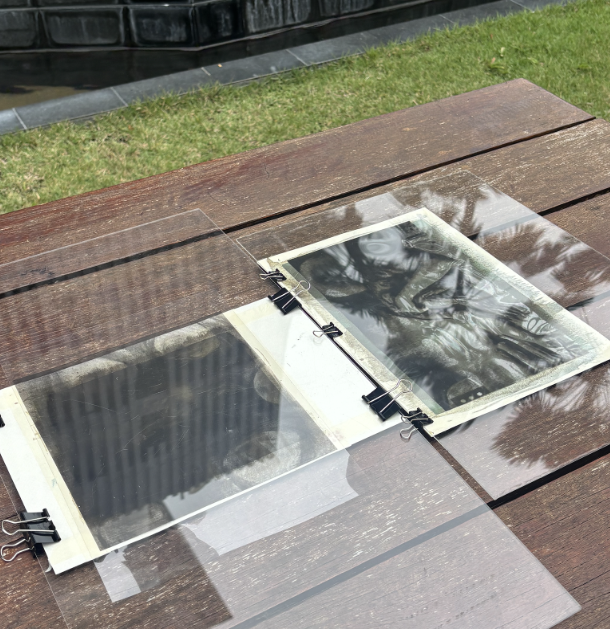
Next, a photograph is converted into black and white before being printed onto transparency film using an inkjet printer. The transparency is placed on top of the sensitised paper and exposed to sunlight or another UV light source. The paper is then rinsed in water to remove the unexposed chemicals, revealing the final image.
One of the interesting aspects of Cyanotype is that it encourages experimentation and individuality rather than focusing on achieving absolute perfection. Every print can become a personal record of a particular moment, making the process both artistic and meaningful.
Wine and vinegar can also be used as natural toning agents to change the colour and appearance of the final print. Their acidity can influence the chemical reactions within the print, producing warmer brown, purple, or grey tones. This allows artists to experiment with different visual effects and further personalise their work (Anderson, 2019).
How Can Cyanotype Support Mental Health and Wellbeing?
Cyanotype can encourage mindfulness because participants need to slow down and focus on observing the process of creating their print. Watching sunlight gradually develop the image can reduce distractions and encourage participants to remain present in the moment.
Furthermore, art-making has been shown to reduce stress, encourage self-expression, and support emotional regulation (Kaimal et al., 2016). Since a Cyanotype does not have one single standard or “correct” outcome, participants can express themselves freely without being afraid of making mistakes.
Therefore, Cyanotype could become a calming and collaborative activity within schools and local communities. It provides an opportunity for participants to explore creativity while also reflecting on their emotions, experiences, and personal memories.
Designing a Cyanotype Workshop
As discussed throughout this project, translating memories and emotions into a practical creative experience through a Cyanotype workshop could be implemented in schools as well as in the wider community. The workshop could be designed for a wide range of age groups because it encourages participants to practise mindfulness and reflect on meaningful memories within the fast-paced world we live in (Kaimal et al., 2016). The workshop could also promote creativity because participants would not be judged based on their artistic abilities.
The materials required for the workshop would include Cyanotype sensitizer, paper or fabric, paintbrushes, transparency film, printed digital negatives, or natural objects such as leaves and flowers. Acrylic sheets could be used to hold the designs in place, together with access to sunlight or a UV light source and trays of water for rinsing the prints. Optional essential oils, such as lavender or rosemary, could also be incorporated into the workshop to introduce an aromatherapy element (Anderson, 2019). The relatively simple materials and process could make it possible to organise workshops for a wider range of participants.
The workshop could begin with a brief introduction to the history of Cyanotype and the scientific principles behind the process. The introduction could also explain the relationship between memory, emotions, and the brain (Victoria and Albert Museum, n.d.). This may encourage participants to begin thinking about their own memories and emotions before starting the practical activity.
After the introduction, participants could search through images on their devices or online to find a photograph that represents a meaningful memory or emotion they would like to express. Once they have selected an image, it would be converted into black and white and printed onto transparency film.
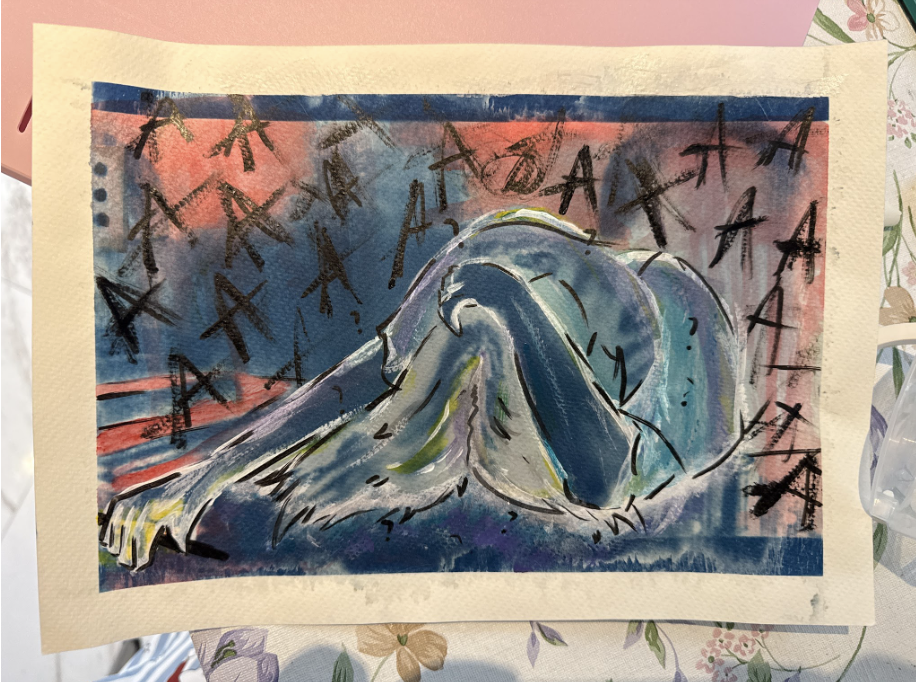
Participants could then prepare the sensitised paper and carefully arrange their chosen images or natural objects before placing the print under sunlight or ultraviolet light. After the exposure period, participants would rinse their paper or fabric in a water bath, revealing the final Cyanotype image. The finished pieces could then be further developed through drawing or painting, allowing participants to add their own personal details and make each artwork more unique.
The workshop could be suitable for people of different age groups because everyone has memories and emotions that they may want to preserve or express. These could include childhood memories, important milestones, or treasured moments shared with loved ones. Cyanotype provides a creative way to transform these experiences into lasting works of art that participants can keep and reflect on in the future.
Cyanotype’s Relationship to Amnesia
Amnesia affects a person's ability to form or retrieve memories and can occur as a result of brain injury or neurological disorders (Cleveland Clinic, 2023). Although Cyanotype cannot directly treat or solve amnesia, it could potentially be used as a meaningful creative activity for people experiencing memory difficulties.
People living with amnesia may benefit from visual reminders of important events from their past, which can help them revisit meaningful experiences (Baddeley et al., 2020). Through a Cyanotype project, individuals could preserve meaningful memories using family photographs or images of objects that may trigger autobiographical memories (Baddeley et al., 2020).
However, memory is not influenced only by what we see. Other senses can also play an important role in memory, particularly smell. Smells can be strongly connected with personal memories and emotions, which creates an opportunity to explore the combination of Cyanotype and aromatherapy.
Aromatherapy and Memory
Our sense of smell has a strong connection with memory because odours can trigger emotional and autobiographical memories (Herz, 2016). Certain smells can suddenly evoke feelings of nostalgia and remind people of their childhood, a memorable holiday, or other significant life experiences.
Aromatherapy uses essential oils such as lavender, rosemary, peppermint, and citrus oils, which have been studied in relation to mood, cognition, and wellbeing (Herz, 2016). Lavender has been associated with relaxation and stress reduction, while rosemary has been linked to alertness and memory performance (Moss et al., 2003; Koulivand et al., 2013).
During a Cyanotype workshop, scents could be incorporated into the experience to create another sensory connection with the artwork. For example, participants could experience a particular scent while creating their Cyanotype and associate that scent with the memories or emotions represented in their artwork. This could create a more personal and multisensory experience.
Combining Cyanotype with scent therefore provides an opportunity to explore how visual art and sensory experiences can work together. Rather than focusing only on preserving an image, the workshop could encourage participants to explore the connections between memory, emotion, scent, and personal experience.
Conclusion
Overall, Cyanotype provides more than a method of producing photographic prints. It can be used as a creative process through which people explore memories, emotions, sensory experiences, and personal expression. Its relatively simple process also makes it suitable for workshops involving different age groups and communities.
By combining Cyanotype with aromatherapy, the project introduces both visual and olfactory experiences. This combination could provide an interesting way to explore the relationship between memory and wellbeing while encouraging participants to slow down, reflect, and express themselves creatively.
Although Cyanotype should not be considered a treatment for amnesia or a substitute for professional healthcare, it could be explored as a meaningful creative and sensory activity that supports reflection, social participation, and personal expression.
References
Baddeley, A., Eysenck, M.W. and Anderson, M.C. (2020) Memory. 3rd edn. London: Psychology Press.
Cleveland Clinic (2023) ‘Aromatherapy: What it is, uses, benefits & risks’. Available at: https://health.clevelandclinic.org/aromatherapy (Accessed: 21 July 2026).
Herz, R.S. (2016) ‘The role of odor-evoked memory in psychological and physiological health’, Brain Sciences, 6(3), p. 22. Available at: https://doi.org/10.3390/brainsci6030022.
Kaimal, G., Ray, K. and Muniz, J. (2016) ‘Reduction of cortisol levels and participants’ responses following art making’, Art Therapy, 33(2), pp. 74–80. Available at: https://doi.org/10.1080/07421656.2016.1166832.
Koulivand, P.H., Khaleghi Ghadiri, M. and Gorji, A. (2013) ‘Lavender and the nervous system’, Evidence-Based Complementary and Alternative Medicine, 2013, Article 681304. Available at: https://doi.org/10.1155/2013/681304.
Moss, M., Cook, J., Wesnes, K. and Duckett, P. (2003) ‘Aromas of rosemary and lavender essential oils differentially affect cognition and mood in healthy adults’, International Journal of Neuroscience, 113(1), pp. 15–38. Available at: https://doi.org/10.1080/00207450390161903.
Victoria and Albert Museum (n.d.) ‘A blueprint for the future: Cyanotypes by Anna Atkins’, V&A Blog. Available at: https://www.vam.ac.uk/blog/caring-for-our-collections/a-blueprint-for-the-future-cyanotypes-by-anna-atkins (Accessed: 21 July 2026).